


Neopets: Tales of Dacardia
3.2348.00 Reviews
App Specs
- Version
- 1.14.6
- Updated On
- License
- Free
- Downloads
- 10,000+
- Developer
- World of Neopia, Inc
- Categories
- Adventure
- Platform
- Android
Screenshots
 Analysis by AppCompare
I approached Neopets: Tales of Dacardia as a newcomer rather than as someone already familiar with the wider Neopets world. That matters because the game is built around a gentle adventure premise: a mysterious storm has left Dacardia in need of rebuilding, and your role is to help restore the community. It is free to start, belongs to the adventure category, and is aimed at Everyone, but its appeal is less about fast action and more about making steady progress in a colorful setting.
My first impression was that this is best understood as a relaxed rebuilding adventure with a storybook feel. I would recommend it to someone who enjoys checking in, completing manageable objectives, and watching a damaged place become more welcoming over time. I would not choose it for a player looking for constant combat, demanding reflex challenges, or a large open world that immediately hands over complete freedom.
What the first session feels like
The opening works best when you give it a little patience. Rather than treating every early instruction as something to rush through, I found it more useful to see the first tasks as a guided tour of Dacardia. The game gradually introduces its central idea: progress comes from helping the settlement recover, understanding what needs attention, and turning individual jobs into visible improvement.
That approach makes the experience approachable for first-time players. You do not need to arrive with detailed knowledge of Neopets, and the setting is friendly enough for younger players who meet the Everyone age rating. At the same time, the pace may feel slow if you normally play adventure games for their danger, surprise, or constant movement. The atmosphere is the main attraction, not pressure.
The developer, World of Neopia, Inc, presents the game as a focused mobile experience rather than a sprawling console-style adventure. On a phone, that can be convenient. I can imagine opening it during a short break, completing a small piece of restoration, and leaving without needing to memorize a complicated control scheme. The trade-off is that short sessions can sometimes feel more like maintenance than a dramatic adventure, especially once the novelty of the opening has faded.
Its current version is 1.14.6, and the game requires at least OS 10. That makes checking your device before installing a sensible first step, particularly if you are using an older phone or tablet. The download itself is free, while optional in-app purchases range from $0.99 to $79.99 per item. I would treat those purchases as something to examine carefully rather than as part of the basic promise of the game.
Start by following the immediate objective
When I begin a game like this, I am tempted to explore every visible corner before completing the first assignment. Here, I think that is the less helpful approach. The opening objective gives you the clearest route into the game’s rhythm, so I would follow it until the first task is complete before experimenting too much.
Worth Reading Before You Choose

EA SPORTS FC Mobile 26 Is a Bigger Football Game, but It Takes Time

Flipboard Shows What News Apps Must Do Beyond the Feed

Switching to Android Auto Means Rethinking Your Driving Routine

Google Calendar Makes a Crowded Week Easier to Manage

Ludo King Makes the Most of the Minutes Between Plans

Baby Panda World Brings Quick Play to Modern Phones, but Its Game Library Feels Busy
Pay attention to the wording of each instruction. A rebuilding game often asks you to do more than simply tap a highlighted object, and the useful habit is to identify what the task is trying to teach. Is it showing how to move through the area, how to interact with a location, or how to recognize the next stage of restoration? Reading that purpose makes later objectives easier to understand.
A practical tip is to avoid tapping rapidly through every prompt. Even when the presentation feels simple, the early explanations establish the vocabulary of the game. Skipping them can leave you wondering why a location is not progressing or why an apparently available action is not the one the current objective requires. The few extra seconds spent reading are usually worth it.
I also recommend playing the opening with a stable connection and enough battery for an uninterrupted session. I am not suggesting that every later visit must be long; rather, the first meaningful sequence benefits from continuity. If you stop halfway through an introduction, you may return without remembering which part of the town needed attention or what the current objective was asking you to do.
How to reach the first satisfying result
The first real success is not simply reaching a new screen. It is completing an action that visibly contributes to Dacardia’s recovery. That moment gives the game its clearest identity: you are not only collecting points or clearing abstract stages, you are helping a place move from damage toward renewal.
To get there smoothly, I would use a three-part routine. First, read the active objective and identify the location or character connected to it. Second, complete the requested interaction without wandering too far from the current area. Third, pause after the result and look at what has changed before immediately chasing the next prompt. That final pause helps you understand the relationship between individual tasks and the wider rebuilding theme.
This is also where the game’s strongest emotional advantage appears. A small task can feel more rewarding when it has a visible connection to the town. Players who enjoy decorating, organizing, or restoring spaces may find that sense of continuity more satisfying than a conventional level-completion screen. The reward is partly functional and partly visual: the world feels less broken because you took action.
For a busy everyday scenario, I could see playing during a commute break or while waiting for an appointment. I would open the game, check the current objective, complete one manageable action, and stop after confirming the result. That is a better fit than starting a session when I want a deep, uninterrupted story. The game’s calm structure supports small visits, provided I accept that progress may be gradual.
Where new players can become confused
The biggest source of confusion is the difference between seeing something in the environment and being ready to use it. A location may look important, but the current objective still determines whether it is relevant. When I feel stuck in a game like this, I go back to the active instruction instead of tapping every object at random. That simple reset often prevents unnecessary wandering.
Another point to understand is that rebuilding is a sequence, not a single action. Completing one request may unlock the next part of the process rather than finishing an entire area immediately. If the town still looks incomplete after a successful task, that is not necessarily a sign that the game failed to register your progress. It may simply be showing you that restoration happens in stages.
I would also keep an eye on the difference between ordinary progression and optional spending. Because the game is free to start and includes purchases, a new player should not assume that every highlighted offer is necessary for the next story step. My advice is to continue with the normal objective first, then decide whether an optional purchase actually improves the way you want to play. If you prefer a controlled budget, disable purchase access through your device settings before handing the phone to a child.
The rating can also create the wrong expectation. Everyone does not mean that every player will enjoy the same pace. Younger users may appreciate the accessible theme, while older players who want strategic depth or intense adventure may find the experience too mild. Age suitability and personal taste are separate questions, and this game is more successful as a welcoming rebuilding journey than as a challenging action title.
How to make progress without turning it into a chore
I found that the best way to approach the game is to choose a session goal before opening it. A goal such as “finish the current rebuilding request” is more useful than “make as much progress as possible.” This keeps the experience focused and reduces the temptation to spend simply because a shortcut appears attractive.
A second useful habit is to notice which objectives are connected. If the game points you toward one part of Dacardia and then asks you to respond to the result, stay with that chain rather than jumping between unrelated activities. Following the local sequence makes the story easier to track and gives the restoration work a stronger sense of cause and effect.
I would also avoid judging the game after only a few minutes. Its appeal depends on accumulation: one repaired element may seem modest, but several completed tasks create a clearer sense of a community returning to life. That does not mean the slow pace will suit everyone. It means the correct test is whether you enjoy gradual improvement, not whether the opening delivers immediate spectacle.
For players familiar with traditional adventure games, the comparison is revealing. A combat-heavy adventure usually measures success through danger overcome, equipment earned, or enemies defeated. Dacardia instead emphasizes attention, errands, and restoration. A life-simulation game may offer more open-ended daily routines, while a city builder may provide deeper control over systems and layouts. This title sits between those ideas, using the rebuilding theme as a guided adventure rather than a fully flexible management sandbox.
That position is both its strength and its limitation. I like the clarity of being told what matters next, especially when I want a relaxing experience. However, players who want to design every detail or make major strategic decisions may eventually wish for more control. If your favorite part of a building game is experimenting with complex layouts, this may feel more directed than you expect.
Who will enjoy the longer journey
I think the game is a good match for Neopets fans who want a mobile story set in that world, but existing fandom is not required. It also suits players who enjoy gentle adventure, visual restoration, and objectives that can be handled in short sessions. Families may appreciate the approachable premise, although I would still supervise spending because the purchase range includes both small and much larger optional items.
It is less suitable for someone who wants a completely offline-feeling experience, rapid combat, or a game that delivers its deepest systems immediately. It may also disappoint players who dislike waiting for gradual progression or who prefer to invent their own goals without being guided from task to task.
The public response reflects a mixed reception: the game has an average rating of 3.2 from around 1.1 thousand ratings, with 348 reviews and over 10 thousand installs. I would read that as a reason to set expectations carefully rather than as a simple verdict. The concept is appealing, but the slow, guided structure will naturally divide players. Some will enjoy the calm restoration loop; others will want more freedom or stronger momentum.
One non-obvious advantage is that the premise makes it easier to return after a break. In a complicated strategy game, forgetting the state of several systems can make re-entry unpleasant. Here, the central question remains understandable: what part of Dacardia needs help next? That simplicity is valuable for casual players, parents sharing a device, or anyone who does not want a game to demand daily concentration.
What to do after the first success
Once the first meaningful restoration action is complete, I would resist the urge to treat the tutorial as the whole game. Instead, use the next objective to test whether the core loop suits you. Can you enjoy moving from request to request, noticing the settlement develop, and making progress without needing constant novelty? If yes, the game has probably found its audience in you.
This is also the right time to decide how you feel about purchases. I would play through the next few objectives without buying anything, then consider whether the free progression already gives you the experience you wanted. If it does, there is no reason to spend merely because an item is presented. If you do choose to purchase, set a personal limit first and remember that the listed items can cost anywhere from $0.99 to $79.99.
New players should also confirm that their device meets the OS 10 minimum before troubleshooting performance or installation. That small check can save time. Since the game is free, trying it is relatively low-risk financially, but your time is still worth protecting: give it enough sessions to experience the restoration loop, then move on if the guided pace does not hold your interest.
My final view is positive but specific. Neopets: Tales of Dacardia is not trying to be the loudest or most demanding adventure on a phone. Its best moments come from helping a damaged community recover, following a clear chain of tasks, and seeing small actions accumulate into a more hopeful place. I would recommend it to a friend who wants a calm, accessible game with a recognizable world and room for short visits.
I would skip it for a friend asking for fast battles, deep city planning, or unrestricted exploration. For everyone else, the sensible path is simple: install it, follow the opening objective carefully, complete the first restoration action, and judge the game by how satisfying that gradual change feels. If that first repaired piece gives you a quiet sense of progress, the longer journey through Dacardia is likely worth continuing.
Pros
- Relaxed city-building gameplay suited to short play sessions.
- Charming Neopets-inspired art style with plenty of visual personality.
- Exploration and quests add variety beyond basic resource management.
- Regular objectives give returning players clear goals to pursue.
- Accessible controls make it easy to play on phones and tablets.
Cons
- Progress can feel slow without frequent check-ins and resource collection.
- Some tasks rely heavily on timers
- limiting how quickly you can advance.
- The interface may feel crowded when managing several buildings and quests.
- Later upgrades can require substantial amounts of in-game resources.
- Performance may vary on older devices
- especially in busier areas.
FAQs for Neopets: Tales of Dacardia
What is Neopets: Tales of Dacardia?
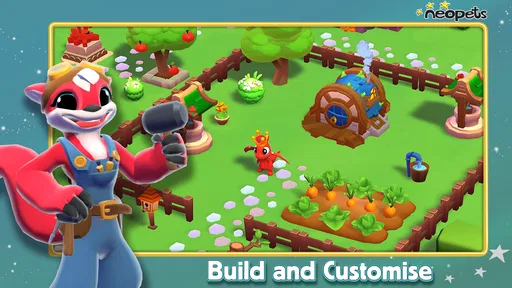
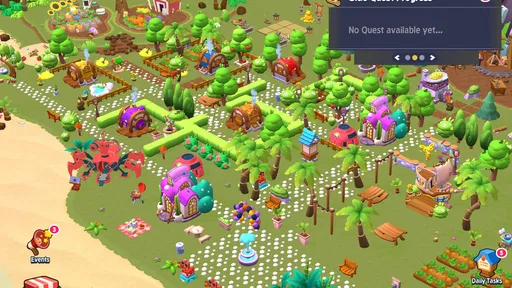
Neopets: Tales of Dacardia is a cozy city-building and adventure game set in the Neopets universe. You take the role of a Dacardian helping rebuild the island after a devastating storm. The game combines town management, exploration, quests, decoration, and character interactions, making it suitable for players who enjoy relaxed progression rather than fast-paced combat or competitive gameplay.
Is Neopets: Tales of Dacardia free to download and play?
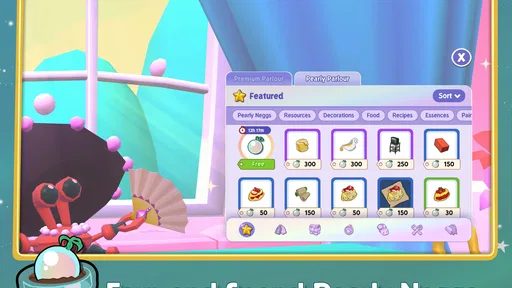
The game can be downloaded for free, but it may include optional in-app purchases. These purchases can provide additional resources, cosmetic items, convenience features, or access to certain content, depending on the current version and region. You can generally begin rebuilding Dacardia without paying, although progress may feel slower if you choose not to spend money. Parents should review purchase settings before allowing children to play.
Does Neopets: Tales of Dacardia require an internet connection?
An internet connection is generally recommended, and some features may require the game to connect to its servers. Online access can be necessary for account synchronization, updates, events, purchases, and certain gameplay systems. Because requirements may change with updates, it is best not to assume that the game offers a complete offline experience. Players should also expect occasional maintenance or loading interruptions.
What kind of gameplay can I expect in Tales of Dacardia?
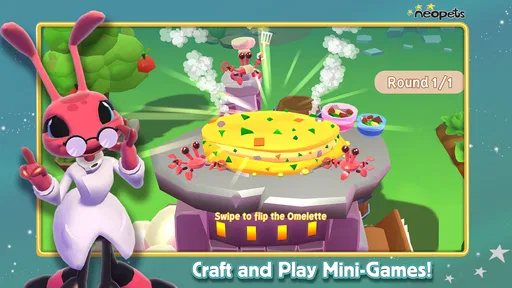
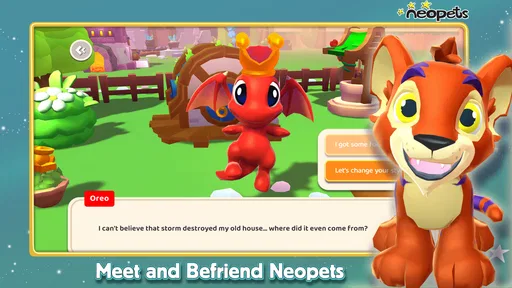
The main experience focuses on restoring and expanding Dacardia while completing tasks for its residents. You gather materials, manage construction projects, decorate areas, meet characters, and follow story-driven objectives. The pace is mostly calm and accessible, with progression built around waiting for activities to finish and returning to collect rewards. It is a better fit for casual players than those seeking action-heavy battles.
Is Neopets: Tales of Dacardia suitable for children and longtime Neopets fans?
The colorful presentation, friendly characters, and straightforward objectives make Neopets: Tales of Dacardia approachable for younger players and families. Longtime Neopets fans may especially enjoy the familiar setting and references, although the game is structured as a mobile management adventure rather than a direct recreation of the original website. Since it may contain advertising, online features, or optional purchases, adult supervision and device controls are still recommended.


